(a) Describe the characteristics of any two of the following types of landforms
(i) delta
(ii) atoll
(iii) caldera
(b) Explain with the aid of diagrams the mode of formation of each of the landforms you have chosen
(i) delta
(ii) atoll
(iii) caldera
(b) Explain with the aid of diagrams the mode of formation of each of the landforms you have chosen
Take Free Practice Test On 2026 JAMB UTME, Post UTME, WAEC SSCE, GCE, NECO SSCE
Correct Answer: Option n
Explanation:
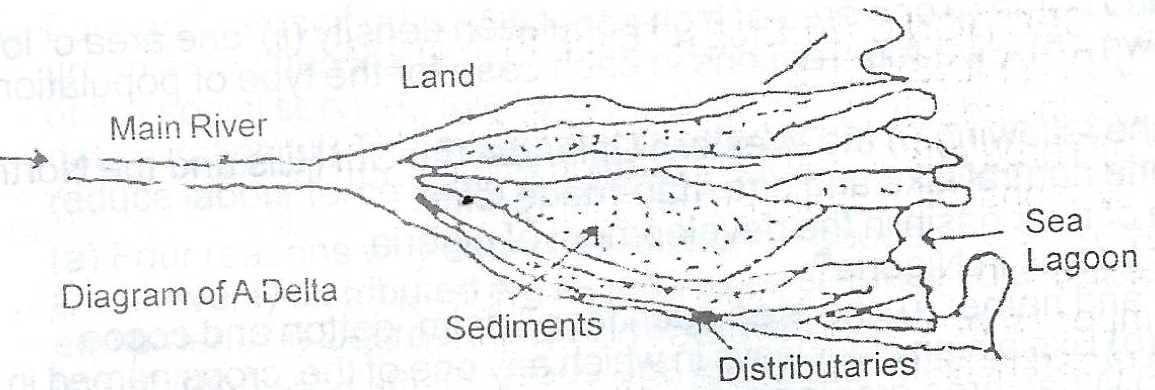
(a)(i) The characteristics of a delta include:
(i) The branching of rivers into channels called distributaries
(ii) Large deposits of weathered materials
(iii) It is formed at the mouth of rivers
(iv) It takes up the shape of a fan
(b) The r of formation of a delta is influenced by the following factors;
(i) Active vertical and lateral erosion in the upper course of the river to provide extensive sediments to be deposited as deltas
(ii) The coast should be sheltered or tic',
(iii) The sea adjoining the delta should be shallow or else the load will disappear in the deep waters
(iv), Absence of lakes in the river course to filter off the sediments
(v) Absence of strong current running at right angles to the mouth so as not to wash away sediments
(b)(i) Characteristics of caldera:
(i) It is formed from volcanic activities
(ii) It is a depression on volcano cones with steep sides
(iii) Depression of magma gives rise to caldera
(iv) It may contain water called caldera lake. Caldera is formed when composite volcano explodes violently, its top is blown off and disintegrates into a mass of rocks and ashes, leaving the crater greatly enlarged. The huge crater-like depression is coiled caldera. It can also be formed through subsidence. The depression may result in accumulation of water to form caldera lake
(a)(i) The characteristics of a delta include:
(i) The branching of rivers into channels called distributaries
(ii) Large deposits of weathered materials
(iii) It is formed at the mouth of rivers
(iv) It takes up the shape of a fan
(b) The r of formation of a delta is influenced by the following factors;
(i) Active vertical and lateral erosion in the upper course of the river to provide extensive sediments to be deposited as deltas
(ii) The coast should be sheltered or tic',
(iii) The sea adjoining the delta should be shallow or else the load will disappear in the deep waters
(iv), Absence of lakes in the river course to filter off the sediments
(v) Absence of strong current running at right angles to the mouth so as not to wash away sediments
(b)(i) Characteristics of caldera:
(i) It is formed from volcanic activities
(ii) It is a depression on volcano cones with steep sides
(iii) Depression of magma gives rise to caldera
(iv) It may contain water called caldera lake. Caldera is formed when composite volcano explodes violently, its top is blown off and disintegrates into a mass of rocks and ashes, leaving the crater greatly enlarged. The huge crater-like depression is coiled caldera. It can also be formed through subsidence. The depression may result in accumulation of water to form caldera lake